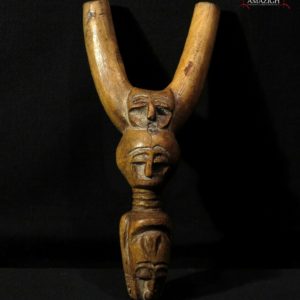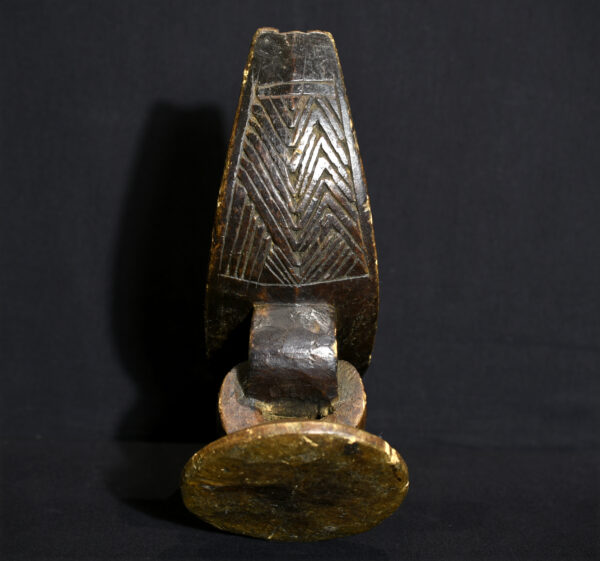
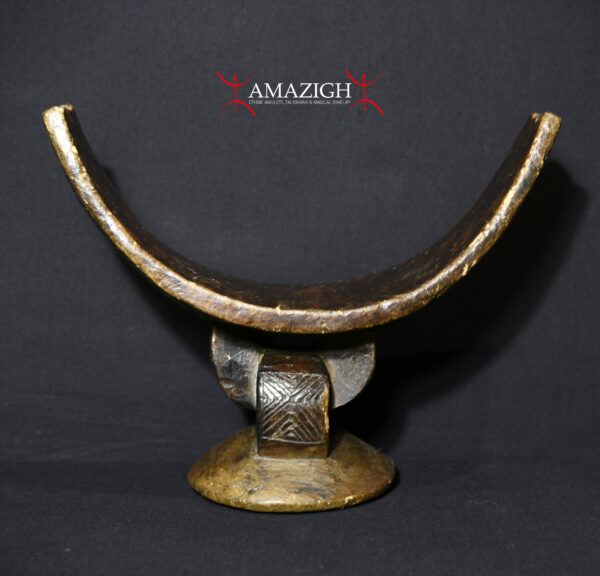
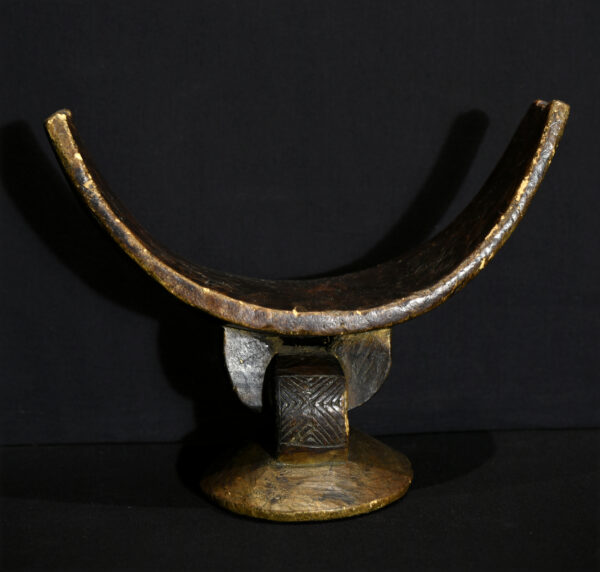
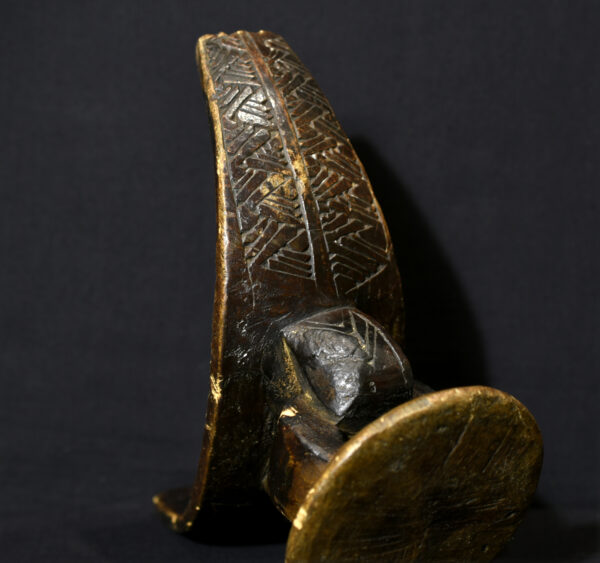
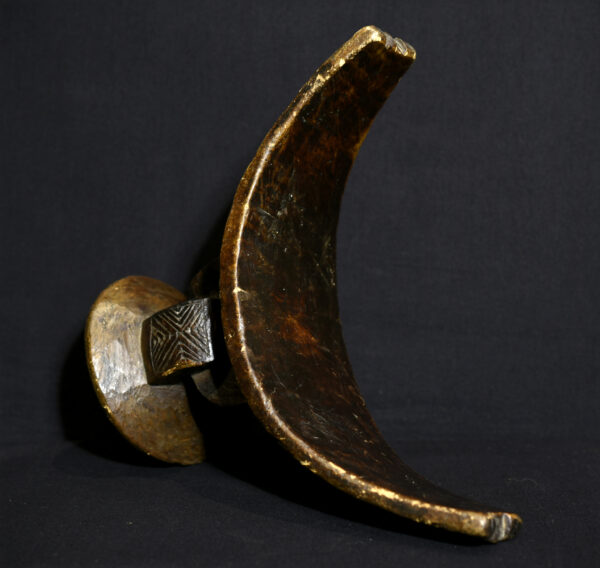
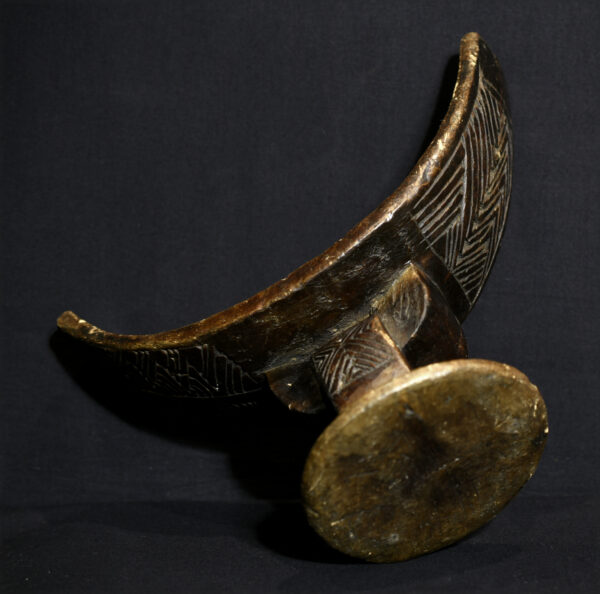
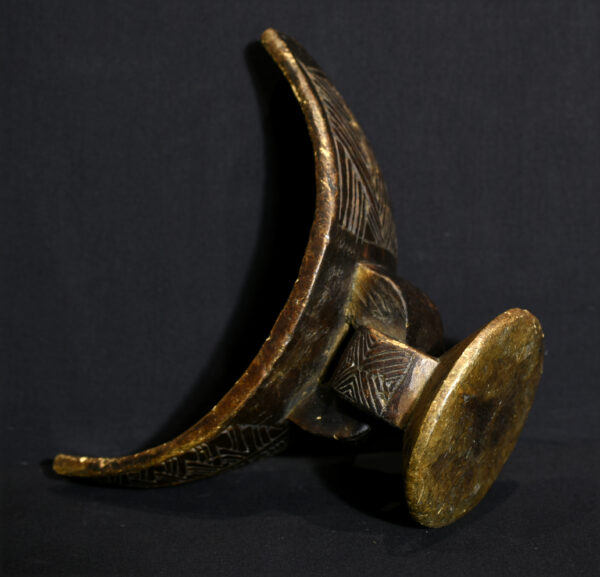
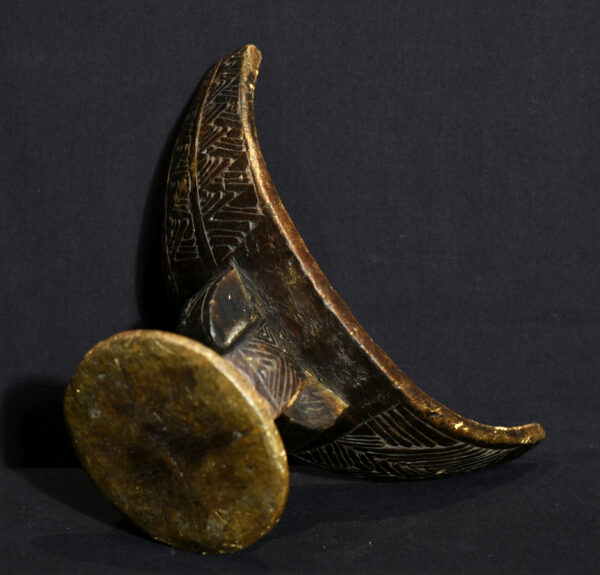
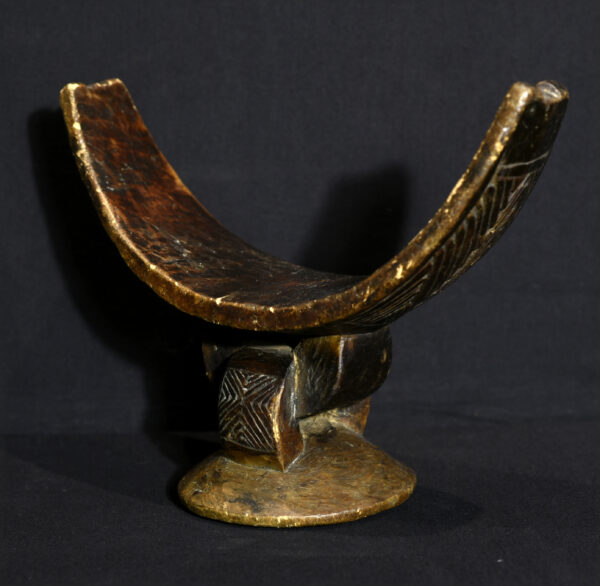
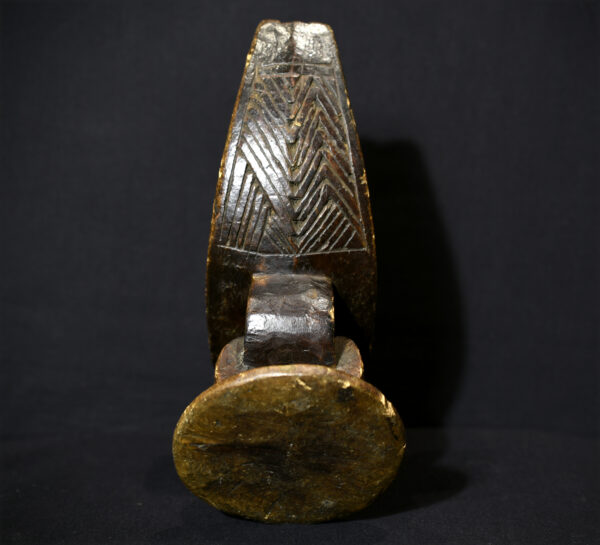

Outstanding Headrest – Barshin – Somali Tribe – Ogaden Region, South Ethiopia. RARE
300,00€
Mid 20th century. Carved wood. Cm. 19,0 high and cm. 25,5 width (7.48″ x 10.04″). Grams 213,1 (7.52 oz.). RARE ITEM.
Men in East Africa use headrests both as pillows and as indicators of status. This type of man’s headrest is used by the Somali nomads. The more elaborate the headrest is, the higher the status is of its owner.
The patterns on Somali and Boni headrests probably reflect the Islamic influence in the region. Some scholars interpret the patterns and iconography as a “form of shorthand for a prayer,” to ensure God’s protection of the sleeper.
Headrests also play an important role in the nuptial ceremonies of Somali nomads. On his wedding night, the groom places the tubash (a sum of money) under the bride’s headrest. The morning after the marriage is consummated, the bride will use this money to purchase an amber necklace, the symbol of her new status.
The headrests are carved from a single piece of fine-grained wood known as hagar in Somali, or also yucub wood. The wood is usually left its natural color, but is sometimes painted red or black by its owner.
References- National Museum of African Art and Metropolitan Museum of Art
m24
- Additional information
Additional information
| Weight | 2020 g |
|---|