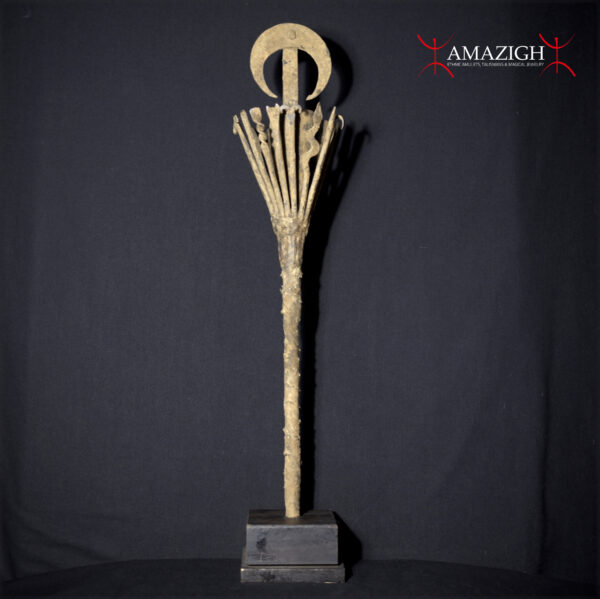
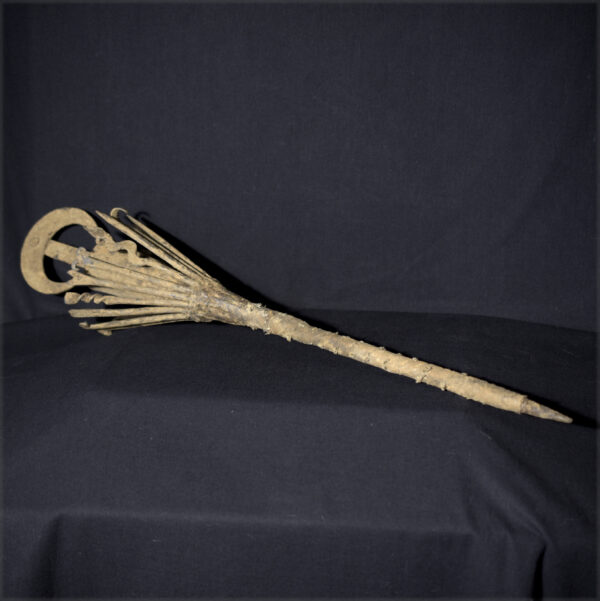

Old Asen Ritual Altar – Fon – Benin
300,00€
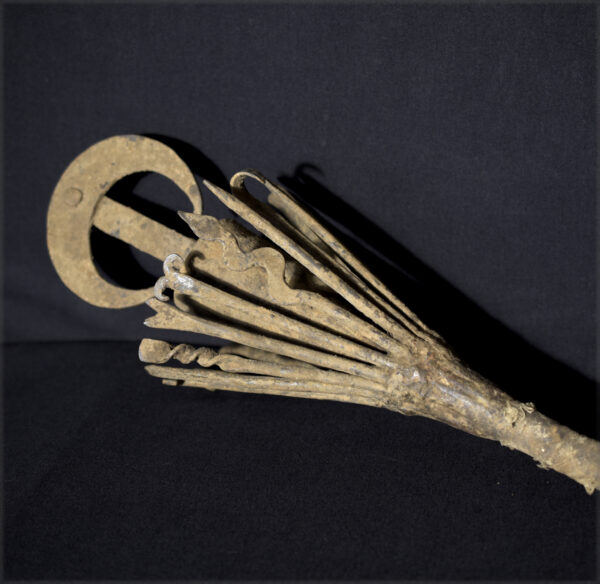
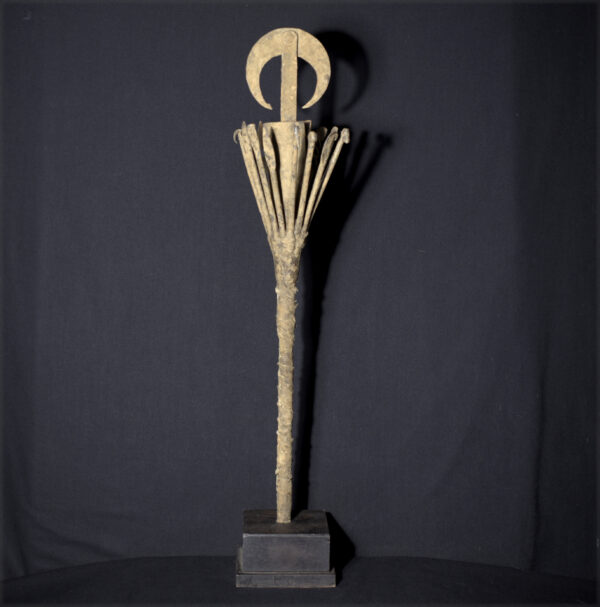
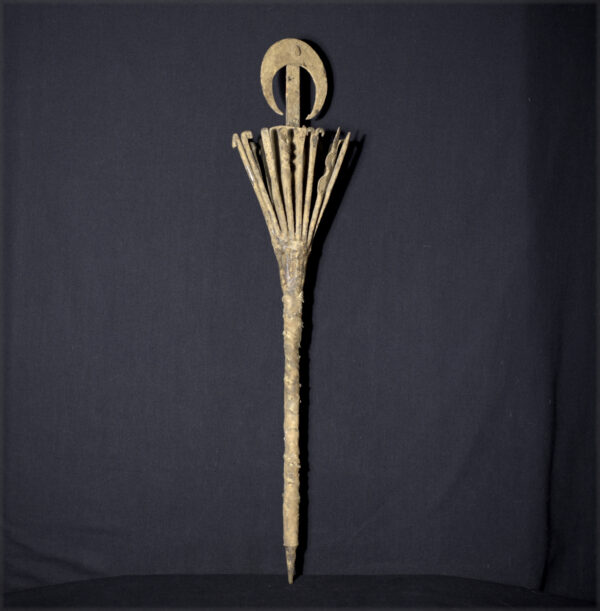
Iron, cm 58,3 high on the custom stand (22.95″); grams 1.447,7 (3.19 lb). The altar is composed of a set of stems, welded at the summit. In the centre there is a longest stem on wicht an iron crescent is fixed.
Placed in family shrines, Asen altars, crafted out of iron, become the focus of interaction with ancestors.
They are housed in a small building in the courtyard of the family compound that were tended by elder woman in the family. These forged iron staffs were created for each ancestor serving as a link between the living and the dead where offerings and recognition would be offered to each Asen during the dry season in a ceremony called Ahanbiba. During complex funerary ceremonies an Asen would be consecrated to the ancestor and regularly sacrificed to over the year.
The Fon people are the largest ethnic group in Benin found particularly in its south region; they are also found in southwest Nigeria and Togo.
The history of the Fon people is linked to the Dahomey kingdom, a well-organized kingdom by the 17th century but one that shared more ancient roots with the Aja people. The Fon people traditionally were a culture of an oral tradition and had a well-developed polytheistic religious system. They were noted by early 19th-century European traders for their N’Nonmiton practice or Dahomey Amazons – which empowered their women to serve in the military, who decades later fought the French colonial forces in 1890.
Further Reading: Bay, E.G., “Iron Altars of the Fon People of Benin”, 1985.
m24
- Additional information
Additional information
| Weight | 2100 g |
|---|